
Creative automation, endless systems to master and genuine satisfaction from building your own solutions.
Game review · updated 2026-09-17
The Perfect Tower II
Tower defense runs feed a town-sized web of factories, research and automation projects.
The short verdict
Pick it when one production loop is not enough and you enjoy engineering your own shortcuts.
Its many modules arrive at different speeds, and weak explanations can turn late progress into wiki and Discord work.
- US price
- Free to play
- Offline progress
- partial
- Steam Deck
- playable · Valve classification
- Prestige depth
- Automation depth
- Ending
- Open-ended
Editorial review
What players love, what breaks the spell and who should actually play it.
A tower-defense incremental that turns factories and programmable automation into an engineering campus, but weak explanations and minigame sprawl make community guides part of the endgame.
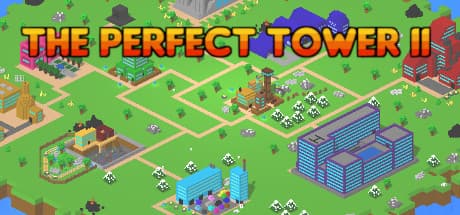
The Perfect Tower II sells itself with waves and tower upgrades, but the real game is the machinery behind the run. Factory chains, research, town modules and programmable automation gradually become as important as the tower itself. At its best, it feels like solving a management game: understand a system, build a shortcut, then watch your old bottleneck disappear. The Factory AI is the standout because it lets you automate chores with logic you designed yourself.
The cost of that ambition is cohesion. Steam reviews repeatedly describe later progression as a pile of loosely connected minigames, currencies and explanations that send players to Discord. Some older systems also lose relevance as new eras arrive, which can make hours of learning feel discarded. We still recommend it to tinkerers — especially because it is free — but not as a clean tower-defense fix. This is a maximalist incremental wearing tower defense as its front door.
Weak onboarding and module sprawl make the late game feel more like a collection of chores than one design.
Tinkerers who enjoy factories, scripting and learning complicated systems at their own pace.
You mainly want tower defense or dislike games that expect wiki and Discord archaeology.
85% positiveVery Positive · 3,295 English-language Steam reviews · checked September 17, 2026
Read player reviews on Steam Steam evidence · 12 Oct 2026
What players are saying now.
English reviews, all purchase types. Daily source check; the editorial verdict above has its own review date.
Compare the daily Steam charts →- Positive overall
- 85% of 3,324 reviews
- Last 30 days
- 68%38 reviews · small samples can swing
- New positive reviews
- 9in the last seven days
System analysis
What playing it actually asks of you
See the core loop, the meaningful choices and the kind of session this game rewards.
Core loop
Tower-defense runs produce materials for a persistent town, where factories, research modules and automation projects prepare the next set of runs.
Progression shape
New town buildings add distinct subsystems rather than merely raising one multiplier. Prestige and challenge structures connect active defense with permanent infrastructure.
What happens when you return
Some production continues away from the game, but the experience is strongest when the player periodically configures modules and builds new automation.
Decision depth
Tower modules, factory chains and automation scripts offer several independent optimization problems with different time horizons.
Best session pattern
Best for players who enjoy returning to a workshop, solving one subsystem, and then leaving the improved machine to operate.
Check the receipts
Steam can change after our last check.
Valve lists this title as Steam Deck Playable; individual compatibility notes may still apply. Price, availability and player sentiment can move, so use the live links before buying.
Continue exploring
Games with overlapping systems

Free · 2023
Unnamed Space Idle
A systems-heavy space incremental about ship loadouts, resource loops and very long progression arcs.
- Offline
- full
- Prestige
- Very deep
- Automation
- Very deep
Free · 2017
Realm Grinder
A deep faction-based incremental where alignment and build choices reshape each run.
- Offline
- partial
- Prestige
- Very deep
- Automation
- Very deep

Free · 2022
Farmer Against Potatoes Idle
A dense idle RPG with classes, equipment, challenges and several permanent progression layers.
- Offline
- full
- Prestige
- Very deep
- Automation
- Very deep